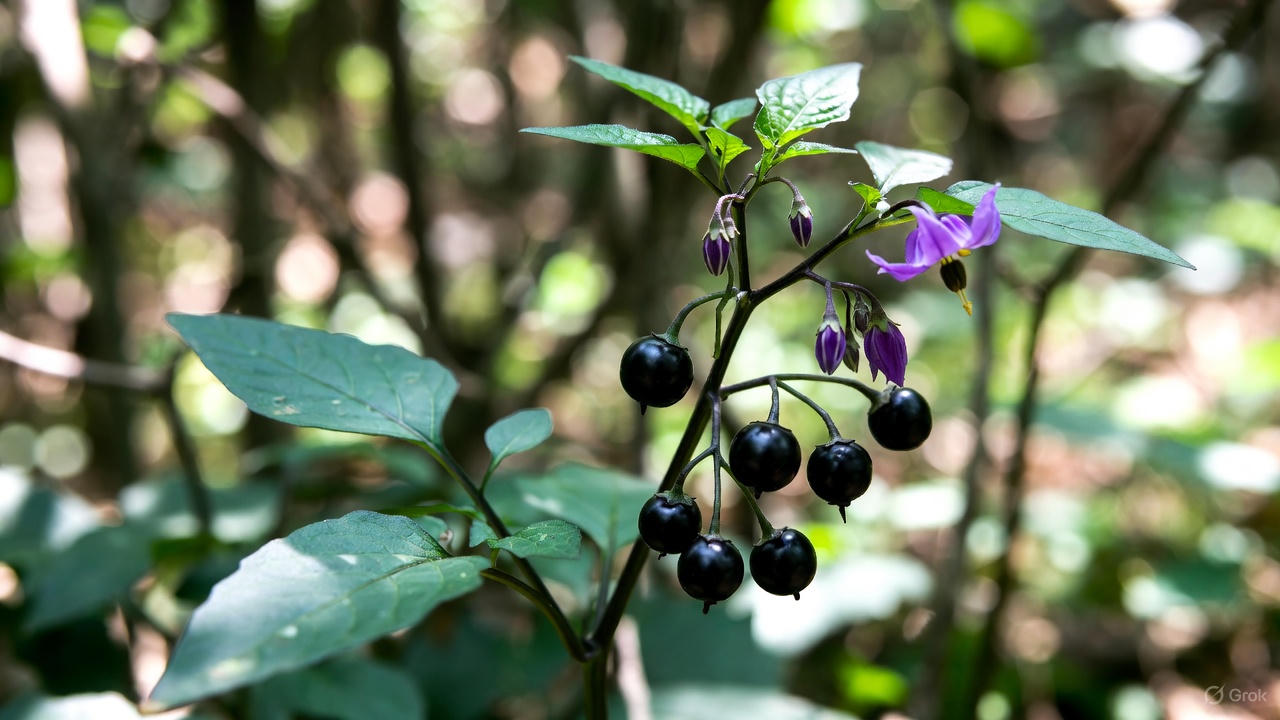
Have you ever stumbled across a plant in your garden that looks oddly inviting, with shiny black berries and purple flowers, only to learn it’s one of nature’s most dangerous tricks? That’s deadly nightshade, or belladonna, for you. This perennial has fascinated and frightened people for centuries, popping up in folklore, medicine, and even poison plots. Native to Europe, Western Asia, and parts of North Africa, it’s made its way to North America and beyond, often lurking in shady spots or disturbed soils. But don’t let its beauty fool you—it’s packed with toxins that can cause serious harm.
In this guide, we’ll dive into what makes belladonna so notorious. We’ll cover its distinctive looks to help you spot it, the scary details of its toxicity including symptoms and historical ties, and practical steps for getting rid of it safely from your yard. Whether you’re a gardener worried about kids or pets, or just curious about wild plants, understanding belladonna is key to staying safe. Let’s break it down step by step, drawing from reliable botanical insights to keep things accurate and helpful.
Spotting Deadly Nightshade: What Does It Look Like?
Identifying deadly nightshade starts with knowing its key features so you don’t mistake it for something harmless like black nightshade or even edible berries.
This plant is a bushy perennial that can grow up to 5 feet tall, though it is often around 3 to 4 feet. It thrives in calcareous soils—think limestone-rich areas—in shady, moist locations like woodlands, hedgerows, or field edges. If your garden has disturbed ground or scrubby spots, keep an eye out.
The leaves are one of the first giveaways: they are large, oval-shaped with pointed tips, and a dark green color, measuring up to 7 inches long. They grow alternately on the stems, and young seedlings might show paler green leaves.
Come summer, belladonna produces its namesake flowers—dull purple, bell-shaped blooms about an inch long, sometimes tinged with green or yellow at the base. They are faintly scented and hang singly from the stems.
But the real attention-grabber is the fruit. Starting green and unripe, the berries ripen in late summer to autumn into shiny, black spheres roughly the size of a cherry, about 0.6 inches across. They are borne individually, not in clusters, which helps distinguish belladonna from less toxic nightshades like bittersweet nightshade (Solanum dulcamara), whose berries are red and clustered. Look for star-shaped calyces (the green parts at the base) joining the single berries to the stalk—that is a classic sign. The whole plant has a branching, upright habit, making it look somewhat like a small shrub from a fleshy rootstock.
Confusing it with other plants? Black nightshade (Solanum nigrum) has smaller, duller berries in clusters and white flowers, while jimsonweed has spiky seed pods. Belladonna’s berries are especially tempting to kids because they look like juicy cherries—hence the nickname “devil’s cherries.” If you are in regions like New York or California, where it is more common as an invasive, regular checks are smart.
The Dark Side: Understanding Belladonna’s Toxicity
Belladonna’s reputation as a deadly plant isn’t hype—it’s earned. Every part, from roots to berries, packs tropane alkaloids like atropine, scopolamine, and hyoscyamine. These chemicals act as anticholinergics, messing with your nervous system by blocking acetylcholine, a key neurotransmitter. That disrupts everything from heart rate to digestion, leading to a cascade of symptoms that can turn fatal.
How toxic is it? Just two to five berries can kill a child, and ten might do in an adult. The roots are often the most potent, with alkaloid levels up to 1.3% in fresh weight, but leaves and berries aren’t far behind. Even the nectar can make honey toxic if bees forage on it. Animals react differently—birds munch the berries and spread seeds unharmed, but dogs, cats, and livestock might suffer narcosis or paralysis. Rabbits and cattle sometimes eat it without issue, but it’s risky.
Symptoms kick in fast if ingested: dilated pupils causing light sensitivity and blurred vision, a racing heartbeat, dry mouth so bad you can’t swallow, slurred speech, and loss of balance. Things escalate to flushing, rash, confusion, hallucinations, seizures, and in worst cases, coma or respiratory failure. Touching the plant can irritate skin, especially if you have cuts, leading to dizziness or mood swings. It’s unpredictable—effects vary by dose and person. If poisoning happens, seek help immediately; antidotes like physostigmine or pilocarpine can reverse it.
Historically, belladonna’s been a double-edged sword. Its name means “beautiful lady” in Italian, from Renaissance women using drops to dilate pupils for a seductive look, though it risked blindness. Ancient Romans and Greeks used it in poisons—rumors say Empress Livia dosed Augustus with it. In medicine, atropine from belladonna treats slow heartbeats, dilates pupils for eye exams, eases IBS spasms, and counters nerve agents. Scopolamine helps with motion sickness. But self-medicating? Absolute no-go—it’s too dangerous, and modern uses are strictly controlled. Folklore ties it to “flying ointments” for witches, blending with opium for hallucinations, and even in love potions or arrow poisons.
Safely Removing Deadly Nightshade from Your Yard
If you’ve spotted belladonna in your garden, act quick—it’s vigorous and spreads via rhizomes and seeds. Removal isn’t just about yanking it; do it wrong, and you risk exposure or regrowth. Always prioritize safety: wear long gloves, protective clothing, and maybe eyewear. Wash everything afterward, and keep kids and pets away.
For small infestations, go organic. Hand-pull young seedlings when soil is moist—grab low and tug roots out. For bigger plants, cut stems to the base with pruners, then dig up roots with a heavy-duty spade. Aim to get the entire root system; leftovers can sprout. Repeat checks every few weeks, as persistence weakens it. Mulch thickly (two or more inches) with cardboard or weed fabric to block light and starve roots. A homemade mix like vinegar and dish soap on roots works in hot, dry weather, but test on a spot first—it might harm nearby plants.
If it’s widespread, consider non-selective herbicides like glyphosate, but use sparingly and follow labels—it’s not eco-friendly and kills everything around. Apply on cut stems for targeted effect. Mowing regularly prevents seeding, but won’t kill roots.
Disposal is crucial: bag clippings, roots, and berries in trash or green waste—never compost or burn, as toxins could linger or spread. Disinfect tools with a bleach solution (one cup per gallon of water) to avoid contamination. Prevent return by improving soil drainage, avoiding limestone-heavy areas if possible, and planting dense ground covers.
Tools you’ll need: gloves, spade, pruners, and a kneeling pad for comfort. For large jobs, professionals might help, especially if you’re unsure.
Stay Vigilant with Belladonna
Deadly nightshade is a plant that demands respect—beautiful yet brutal, with a history as rich as its toxins are potent. By recognizing its oval leaves, purple bells, and black berries, understanding the risks of its alkaloids, and following safe removal steps, you can protect your space. Remember, prevention beats cure: scout your yard regularly and educate others. If in doubt, consult local extension services. Knowledge is your best defense against this ancient foe.